
Mobility Matters Regionally

By Jennifer Chalos | Executive Director for Cumberland Region Tomorrow
This blog summarizes the May 2026 Mobility Webinar.
As Middle Tennessee continues to grow, conversations about transportation, safety, and regional mobility are becoming increasingly important in shaping both how people move through their communities and how the region plans for future growth.
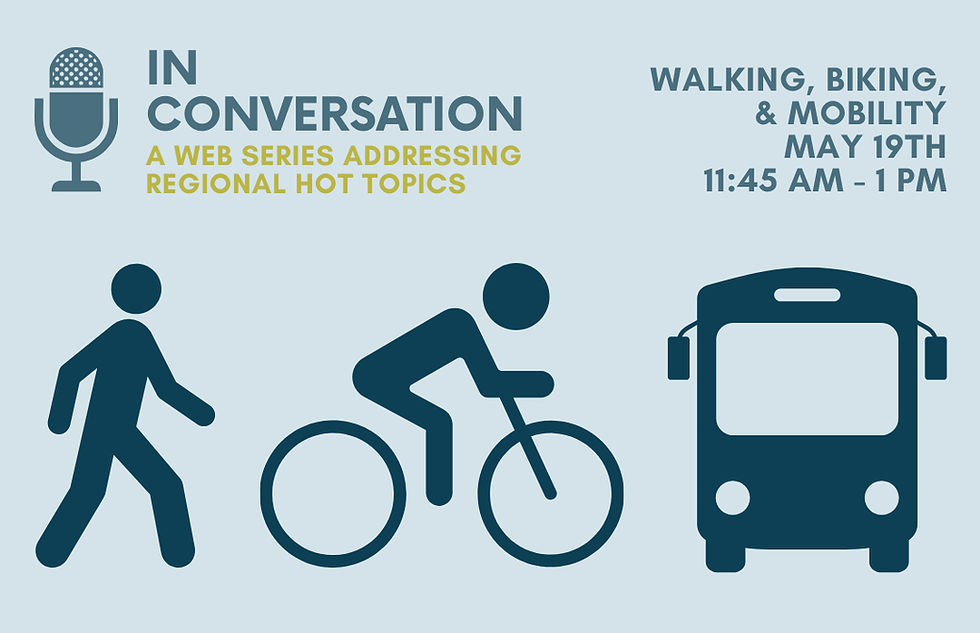
During National Bike Month this May, Cumberland Region Tomorrow spotlighted these issues through its “In Conversation” webinar focused on walking, biking, and regional mobility. The discussion aligned closely with broader Vision Zero goals embraced by many communities nationwide: reducing traffic fatalities and serious injuries while creating safer streets for all users, whether driving, walking, biking, or using transit. Sponsored by Gresham Smith, the webinar brought together transportation leaders and community advocates to explore how mobility policy, infrastructure investment, land use planning, and regional collaboration all influence quality of life, public safety, economic opportunity, and long-term connectivity across Middle Tennessee.
The conversation featured:
Chris Weinman, Strategic Relationship Manager and Transportation Planning Leader at Gresham Smith, board member of Cumberland Region Tomorrow, and former board president of Walk Bike Nashville
Daniel McDonell, Director of Transportation and Infrastructure at Greater Nashville Regional Council and former board member of Walk Bike Nashville
Together, the speakers explored the challenges facing Middle Tennessee’s transportation network and the policy shifts, funding opportunities, and regional partnerships shaping the future of mobility across the region.
Access, Safety, and Opportunity
Opening the webinar, Jennifer Chalos emphasized that transportation affects nearly every aspect of daily life—from access to jobs, schools, healthcare, and recreation to affordability, safety, and community connection.
As the region grows, mobility challenges can no longer be addressed one community at a time. Growth patterns, commuting patterns, and economic activity increasingly cross county lines, making regional collaboration essential to long-term success.
Throughout the webinar, both speakers reinforced an important point: transportation policy is not simply about moving cars more efficiently. It is about ensuring people can safely and affordably access the places they need to go.
More Than Roads
Central to the webinar was the importance of multimodal transportation systems—networks that safely support walking, biking, transit, and vehicle travel together.
Weinman noted that many Tennesseans currently have few practical transportation options beyond driving. Citing statewide transportation data, he highlighted that Tennessee ranks near the bottom nationally in transit commuting, bike commuting, and commuting by foot. At the same time, traffic fatalities continue to rise, particularly among vulnerable road users such as pedestrians and bicyclists.
McDonell emphasized that infrastructure decisions directly shape the choices people have available to them. In many communities, residents may live within walking or biking distance of schools, grocery stores, or transit stops, but lack safe infrastructure to reach them comfortably.
Rather than treating sidewalks, bike lanes, greenways, and transit access as optional amenities, the speakers framed them as foundational public infrastructure investments that support:
Public safety
Economic competitiveness
Health and wellness
Environmental sustainability
Accessibility for residents of all ages and abilities
The webinar further underscored that safer infrastructure benefits everyone—not only pedestrians and bicyclists. Road designs that calm traffic speeds and improve crossings can reduce fatalities and improve overall roadway safety for drivers as well.
Regional Growth Requires Regional Planning
A recurring theme throughout the webinar was the need for transportation planning that reflects the realities of a rapidly growing region.
McDonell shared that GNRC recently completed a new 25-year regional transportation plan projecting:
A significant increase in vehicle miles traveled
Growing congestion across the region
Slower average travel speeds
Rising infrastructure demand that far exceeds currently available funding
He noted that the estimated regional transportation project need has grown dramatically in recent years, reflecting both population growth and the rising cost of infrastructure investment.
Strong connections between transportation and land use planning emerged repeatedly throughout the discussion. Sprawling development patterns, disconnected street networks, and low-density growth can create “transportation deserts” where residents have few mobility options beyond driving long distances for daily needs.
As communities continue to grow, the speakers emphasized the importance of planning for:
Connected street networks
Mixed-use development
Transit-supportive growth patterns
Regional greenway connections
Safer school and neighborhood access
Funding and Policy Shifts
Speakers examined how transportation funding policy in Tennessee is evolving in response to rapid regional growth and increasing infrastructure demand.
Weinman referenced Nashville’s voter-approved “Choose How You Move” transportation improvement program as a major turning point for the region. Prior to its passage, Nashville was one of the largest metropolitan areas in the country without a dedicated funding source for transportation improvements.
McDonell explained that the dedicated transit funding created through the initiative has the potential to significantly expand regional transportation investment while also strengthening the region’s competitiveness for future federal transportation grants.
Key policy and funding issues raised during the webinar included:
The role of state transportation funding programs
Federal safety and infrastructure grants
The importance of sustained transportation revenue sources
The need for faster implementation of safety improvements
Emerging opportunities for regional transit and greenway expansion
One example highlighted was GNRC’s new Safe Streets for All grant program, which will support quick-build and demonstration safety projects across the region. The initiative is intended to help local communities address urgent safety concerns more quickly through smaller-scale infrastructure improvements.
Long-term regional transit connectivity emerged as another important area of focus, particularly stronger commuter transit links between Nashville and surrounding counties.
Community Engagement Matters
Public participation surfaced repeatedly as a critical component of successful transportation planning.
Both speakers encouraged residents to engage with local governments, planning organizations, and public meetings to help shape transportation priorities in their communities. Public input often plays a critical role in identifying dangerous intersections, unsafe corridors, and mobility gaps that may not otherwise receive attention.
Schools, nonprofit organizations, advocacy groups, and public health leaders were identified as important partners in advancing safer and more connected communities.
Organizations including Walk Bike Nashville, Bike Walk Franklin, and other regional partners continue to help advance conversations around mobility, safety, accessibility, and transportation choice throughout Middle Tennessee.
Looking Ahead
Looking toward the future, both speakers expressed optimism that Middle Tennessee is beginning to think more regionally about mobility and transportation investment.
Potential future opportunities discussed included:
Expanded regional transit service
Regional greenway connectivity
Safer walking and biking infrastructure
Better integration of land use and transportation planning
Increased transportation choice for residents
Ultimately, the webinar reinforced that mobility is about more than transportation infrastructure alone. It is about creating communities that are safer, healthier, more connected, and more resilient as Middle Tennessee continues to grow.
CRT’s “In Conversation” series continues to create space for thoughtful dialogue around the opportunities and challenges shaping the region. Through collaboration, public engagement, and long-term planning, Middle Tennessee communities have an opportunity to build a transportation network that better serves residents today while preparing for future growth. To learn more about upcoming conversations and regional initiatives, sign up for the Cumberland Region Tomorrow email list today.

Comments